Volver al listado
Volver al listado
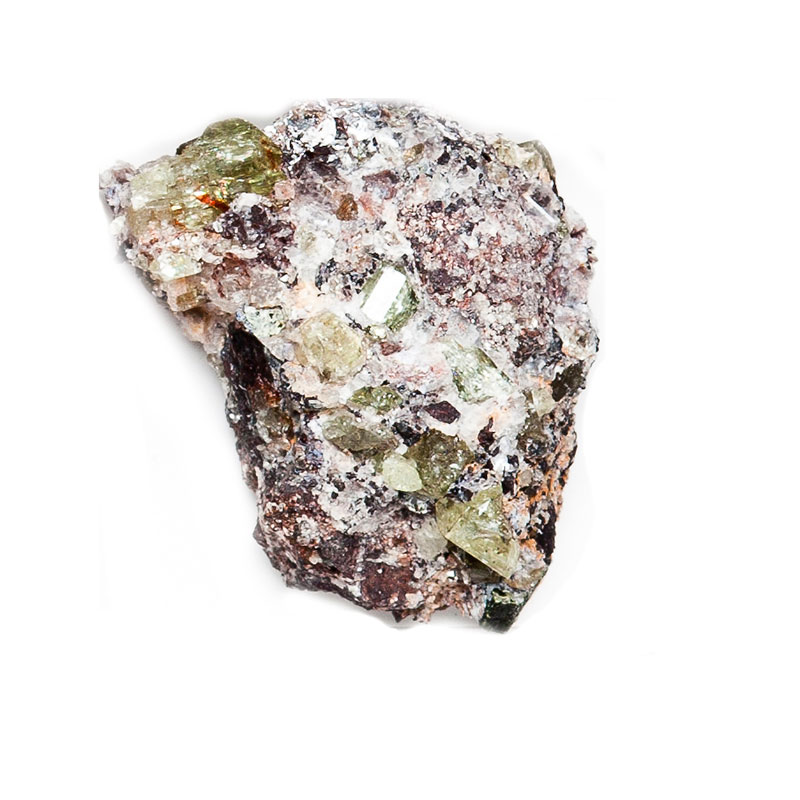
Apatito
Yacimientos Principales
Alemania, Chequia, Portugal, Noruega; Suiza;, Mexico, Rusia, Suecia, Sudafrica, Usa
Descripción y Características
El apatito es un grupo de minerales de fosfato de calcio que contienen flúor, cloro o grupos hidroxilo, localizándose frecuentemente en rocas ígneas como pegmatitas, rocas metamórficas, vetas hidrotermales y también en rocas sedimentarias de origen orgánico. Pertenece al sistema de cristalización hexagonal y es conocido por su gran variedad de colores y su hábito en cristales prismáticos hexagonales bien formados; es un mineral de gran importancia biológica, ya que una variedad de este compuesto es el componente principal del esmalte dental y de los huesos en los vertebrados.
| Fórmula Química | $$Ca₅(PO₄)₃(F,Cl,OH)$$ |
|---|---|
| Lustre | Vítreo graso |
| Raya | Blanca |
| Fractura | Concoidea a irregular |
| Exfoliación | Imperfecta |
| Dureza | 5 Mohs |
| Sistema | Hexagonal |
¿Sabías que...?
Su nombre proviene del griego apate, que significa "engañar", debido a que históricamente se confundía con mucha frecuencia con otros minerales como el berilo, el olivino o la turmalina debido a su amplia gama de colores. Una variedad muy buscada es el "Apatito neón", de un azul eléctrico intenso procedente de Madagascar.
Propiedades New-Age
Cuenta la tradición que en el Cercón de las Brujas se celebraban aquelarres en los que se arrojaban al fuego unos polvos blancos que emitían destellos fluorescentes.