Volver al listado
Volver al listado
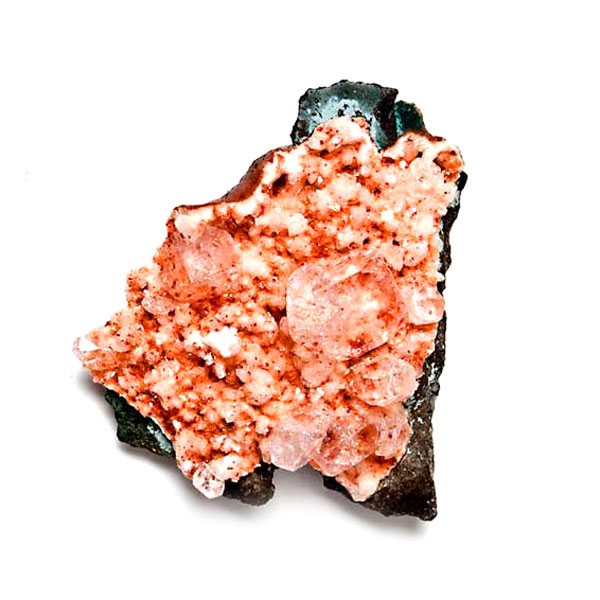
Apofilita
Yacimientos Principales
Apofilitas encontramos en USA, Brasil, Rusia o Sudáfrica, aunque los ejemplares mundialmente más famosos son los que proceden de India en el distrito de Poonah.
Descripción y Características
La apofilita no es un solo mineral, sino un grupo de filosilicatos hidratados de potasio, calcio y flúor/hidroxilo que se localizan típicamente en las cavidades de rocas basálticas y zonas volcánicas de baja temperatura. Pertenece al sistema de cristalización tetragonal y destaca por presentar un brillo perlado muy intenso en sus caras de exfoliación, formando cristales piramidales o prismas rectangulares que suelen aparecer asociados a las zeolitas; su estructura es tan sensible al calor que, al ser calentada con un soplete, pierde agua y se exfolia en láminas blancas, característica que le da su nombre.
| Fórmula Química | $$(K,Na)Ca₄Si₈O₂₀(F,OH)·8H₂O$$ |
|---|---|
| Lustre | Vítreo, perlado |
| Raya | Blanca |
| Fractura | Irregular a desigual |
| Exfoliación | Perfecta |
| Dureza | 4-4,5 Mohs |
| Sistema | Tetragonal |
¿Sabías que...?
Etimología
Su nombre procede del griego “apo” y “phyllos”, que significa “lejos de” y “hoja” en alusión a la forma que tiene de exfoliarse.
Su nombre procede del griego “apo” y “phyllos”, que significa “lejos de” y “hoja” en alusión a la forma que tiene de exfoliarse.
Propiedades New-Age
La apofilita es un potente conductor energético que actúa como puente consciente entre los reinos físico y espiritual. Facilita el acceso a los registros akáshicos y mantiene el anclaje durante los viajes extracorpóreos, asegurando una transferencia fluida de información.