Volver al listado
Volver al listado
Aragonito
Yacimientos Principales
Podemos encontrar aragonitos por todo el planeta, siendo los más conocidos los procedentes de España, sobretodo los encontrados en Cuenca (Minglanilla).
Descripción y Características
El aragonito es una forma cristalina del carbonato de calcio que se origina en ambientes de baja temperatura cerca de la superficie terrestre, como zonas de oxidación de depósitos metálicos, cuevas (formando estalactitas) y fuentes termales. Pertenece al sistema de cristalización ortorrómbico y es conocido por su gran versatilidad morfológica; destaca especialmente en su variedad "pizolítica" o en maclas hexagonales, y es el componente principal de la parte orgánica de las conchas de moluscos y del nácar de las perlas.
| Fórmula Química | $$CaCO₃$$ |
|---|---|
| Lustre | Vítreo |
| Raya | Blanca |
| Fractura | Concoidea |
| Exfoliación | Pobre / Imperfecta |
| Dureza | 3,5-4 Mohs |
| Sistema | Ortorrómbico |
¿Sabías que...?
Cabe decir que la procedencia del nombre es debido a que se dató por primera vez en el Río Gallo de Molina de Aragón.
Propiedades New-Age
El aragonito es una poderosa piedra sanadora que actúa como anclaje energético, siendo ideal para limpiar líneas telúricas y transformar la tensión geopática. Su frecuencia es especialmente útil en periodos de estrés, ya que centra la energía física y estabiliza los chakras base y de la tierra.
Usos de Aragonito
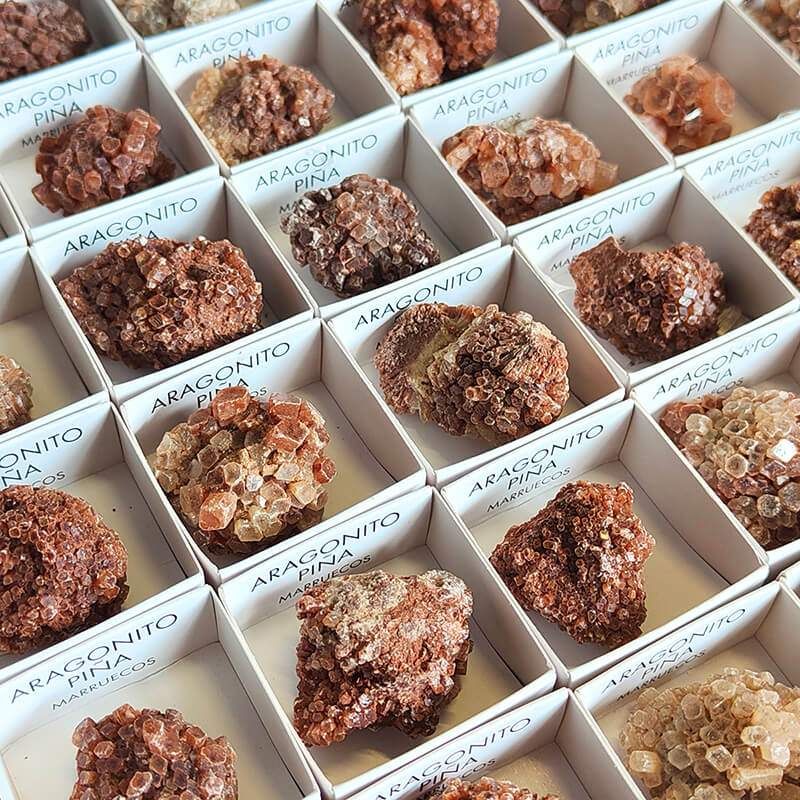
El aragonito se suele utilizar y comercializar como mineral de colección.