Volver al listado
Volver al listado
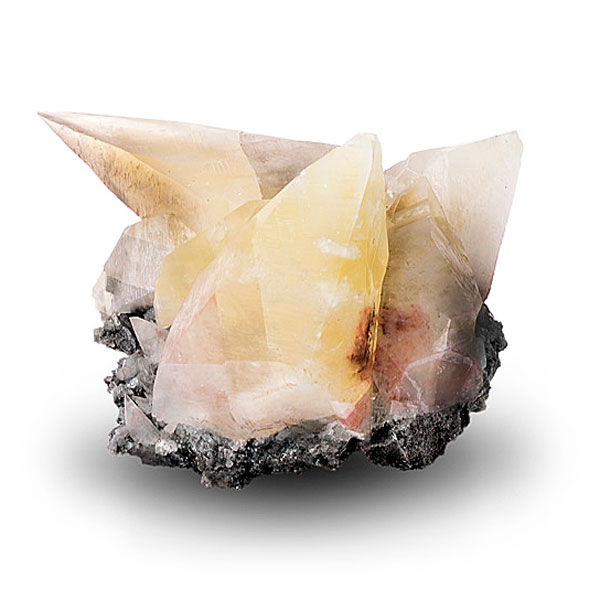
Calcita
Yacimientos Principales
México, Islandia, Brasil, Estados Unidos, China, Marruecos y España.
Descripción y Características
La calcita es el polimorfo más estable del carbonato de calcio y se localiza en una inmensa variedad de entornos geológicos: desde vastas rocas sedimentarias (calizas y mármoles) hasta cuevas (estalactitas) y vetas hidrotermales. Pertenece al sistema de cristalización trigonal y es mundialmente famosa por su birrefringencia o doble refracción (especialmente en la variedad Espato de Islandia), un fenómeno óptico donde un rayo de luz que entra en el cristal se divide en dos, haciendo que los objetos vistos a través de él aparezcan duplicados.
| Fórmula Química | $$CaCO_3$$ |
|---|---|
| Lustre | Viítreo o perlado |
| Raya | Blanca |
| Fractura | Concoidea |
| Exfoliación | Perfecta |
| Dureza | 3 Mohs |
| Sistema | Trigonal |
¿Sabías que...?
Su nombre proviene del latín Calx, que significa Cal.
La calcita es el componente principal de las cáscaras de huevo y de las conchas de la mayoría de los organismos marinos. Además, reacciona efervesciendo inmediatamente al contacto con ácidos débiles como el vinagre o el limón.
La calcita es el componente principal de las cáscaras de huevo y de las conchas de la mayoría de los organismos marinos. Además, reacciona efervesciendo inmediatamente al contacto con ácidos débiles como el vinagre o el limón.
Propiedades New-Age
La calcita es un poderoso amplificador y limpiador de las energías. El simple hecho de tener calcita en la habitación, limpia las energías negativas del entorno y potencia tus reservas personales, así como retira la energía estancada dentro del cuerpo. Es una piedra espiritual que facilita la apertura de la conciencia superior y de las capacidades psíquicas. Psicológicamente conecta las emociones con el intelecto creando una inteligencia emocional. Mentalmente ayuda a relajar la mente, enseña a discernir y a analizar, estimula las percepciones y potencia la memoria. La calcita alivia la tensión emocional y la reemplaza por serenidad ya que es una piedra estabilizante. A nivel sutil, una rejilla de calcitas de colores adecuados equilibra y energetiza todos los chacras. Sostenla o colócala donde sea más apropiado o como elixir. Funciona muy bien usada como pendiente y, en la habitación, puedes hacer una trama de calcitas alrededor de la cama. Hay diferentes variedades de calcitas con atributos diferenciados. Lo mencionado anteriormente puede utilizarse para las calcitas en general pero vamos a diferenciar las variedades de color azul, verde, naranja, rosa y amarillo en fichas independientes por ser cinco calcitas relevantes.