Volver al listado
Volver al listado
Celestina
Yacimientos Principales
Madagascar, USA, Africa, algunas zonas de Europa y China. En España encontramos celestinas en Jaén y Alicante.
Descripción y Características
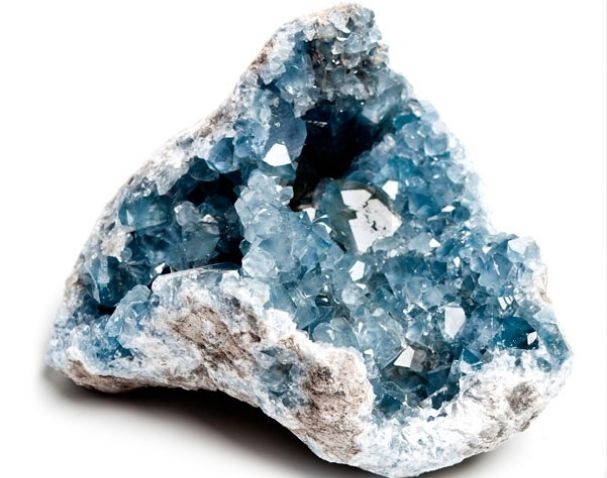
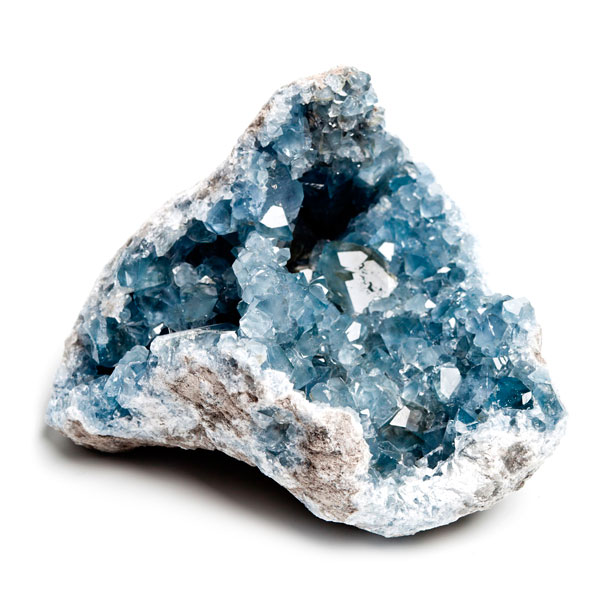
La celestina es un sulfato de estroncio que se forma principalmente en rocas sedimentarias (calizas y areniscas) y en cavidades de geodas, a menudo asociada con azufre, yeso y calcita. Pertenece al sistema de cristalización ortorrómbico. Es la principal fuente de estroncio en el mundo y destaca por sus cristales prismáticos o tabulares de un color azul pálido muy característico, aunque también puede presentarse en formas masivas o fibrosas.
| Fórmula Química | $$SrSO_4$$ |
|---|---|
| Lustre | Vítreo o Perlado |
| Raya | Blanca |
| Fractura | Irregular/Concoidea |
| Exfoliación | Perfecta |
| Dureza | 3-3.5 Mohs |
| Sistema | Ortorrómbico |
¿Sabías que...?
El nombre "Celestina" proviene del latín caelestis, que significa "celestial", en clara referencia a su color azul cielo. Debido a que contiene estroncio, si quemas un pequeño fragmento, la llama se tornará de un color rojo carmesí intenso.
Propiedades New-Age
La celestina tiene una elevada vibración y es una profesora de la Nueva Era. Está imbuida de energías divinas, te permite contactar con los reinos angélicos además de llevarte a la paz infinita espiritual. Es muy útil para estimular la comunicación clarividente, el recuerdo de los sueños y los viajes fuera del cuerpo. Sana el aura y aporta equilibrio y creatividad. Psicológicamente te imparte una fuerza suave y mucha paz interior a la vez que te ayuda a abrirte a nuevas experiencias. Mentalmente te ayuda a calmarte, dispersando las preocupaciones promoviendo la claridad mental y una comunicación fluida. A nivel curativo, al ser un cristal azul, es eficaz para abrir y sanar el chacra de la garganta. Sitúala en el lugar adecuado en el cuerpo, para meditar o para leer la bola de cristal. En el tercer ojo te ayudará a abrir una conexión con las energías universales y, si pones una gran pieza de celestina en la habitación, ésta elevará sus vibraciones.