Volver al listado
Volver al listado
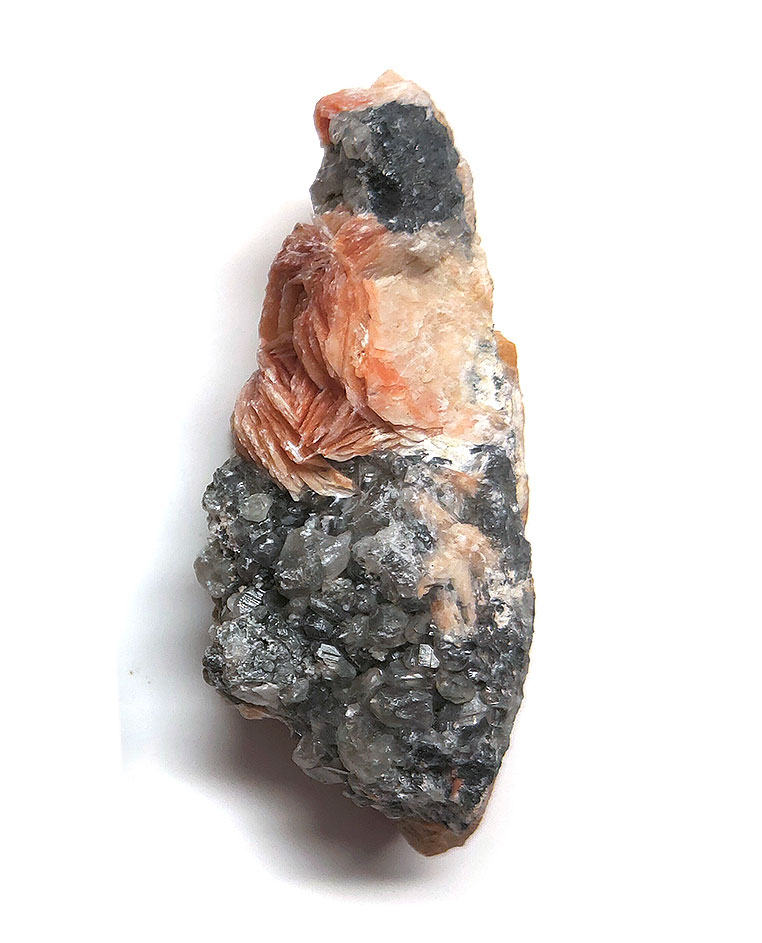
Cerusita
Yacimientos Principales
Marruecos (Mibladen es el más famoso), Namibia (Tsumeb), Australia, Estados Unidos y España.
Descripción y Características
La cerusita es un carbonato de plomo que se forma como mineral secundario en las zonas de oxidación de los yacimientos de plomo (principalmente a partir de la galena). Pertenece al sistema de cristalización ortorrómbico. Es famosa entre los coleccionistas por su altísimo brillo (adamantino) y por formar maclas en forma de "corazón" o redes de cristales entrelazados llamadas "reticuladas". Debido a su alto contenido en plomo, es un mineral excepcionalmente denso.
| Fórmula Química | $$PbCO_3$$ |
|---|---|
| Lustre | Vítreo, graso, adamantino |
| Raya | Blanca |
| Fractura | Concoidea |
| Exfoliación | Buena |
| Dureza | 3-3,5 Mohs |
| Sistema | Ortorrómbico |
¿Sabías que...?
El nombre proviene del latín cerussa, que era el nombre de un pigmento blanco hecho de carbonato de plomo usado antiguamente en cosmética. Por desgracia, este maquillaje era altamente tóxico y causaba graves daños a la salud de quienes lo usaban para palidecer su rostro.
Propiedades New-Age
La cerusita es considerada una piedra de transformación alquímica, que ayuda a sentirse "en casa" en cualquier lugar y a adaptarse a los cambios inevitables de la vida.