
Volver al listado
Volver al listado
Cobre
Yacimientos Principales
Grandes yacimientos en Estados Unidos (lago Superior), el mayor fragmento de cobre nativo pesaba más de 420 toneladas. También se han encontrado cobre nativo en Alemania (esquistos de Mansfield, Zwickau, minas Wolf cerca de Herdodf, Reichenbach), URSS (Urales), Estados Unidos (Bisbee, Georgetown, Keweenaw), Mexico (Cananea), Australia (Burra), Chile, Namibia, (Tsumeb), etc.
Descripción y Características
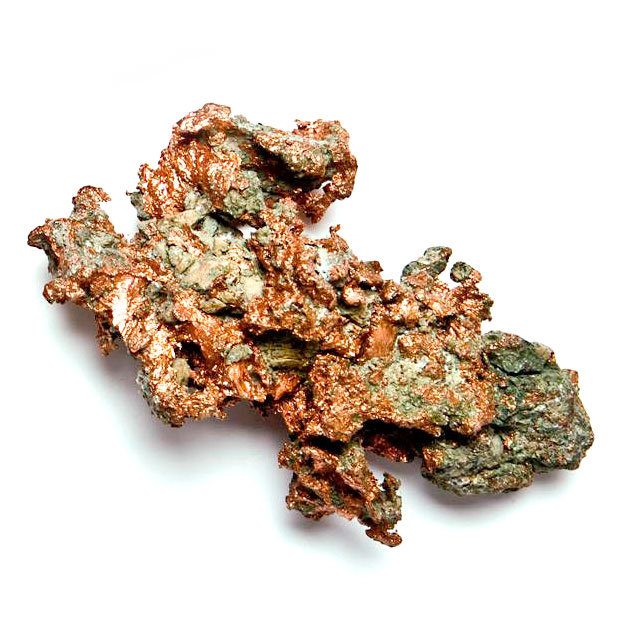
El cobre nativo es un metal de transición que se localiza principalmente en las zonas de oxidación de los depósitos de cobre o como depósitos primarios en cavidades de lavas basálticas. Pertenece al sistema de cristalización cúbico. Aunque suele presentarse en masas deformes, ramificaciones (dendritas) o filamentos, sus cristales bien formados son raros y muy apreciados. Es un excelente conductor de la electricidad y el calor, y se distingue por su maleabilidad y su color rojizo metálico, que con el tiempo desarrolla una pátina verdosa (carbonato) por la exposición a la humedad.
| Fórmula Química | $$Cu$$ |
|---|---|
| Lustre | Metálico |
| Raya | Brillante |
| Fractura | Ganchuda |
| Exfoliación | Nula |
| Dureza | 2,5-3 Mohs |
| Sistema | Cúbico |
¿Sabías que...?
El cobre fue el primer metal que el ser humano aprendió a trabajar hace unos 10.000 años. El nombre proviene del latín cuprum, derivado de la isla de Chipre (Cyprus), que fue la principal fuente de este metal para los antiguos romanos.
Propiedades New-Age
El cobre es conocido como el "gran conductor", no solo a nivel físico, sino también energético. Ayuda a canalizar y amplificar los flujos de pensamiento y energía curativa.