Volver al listado
Volver al listado
Crisopasa
Yacimientos Principales
Los yacimientos de crisoprasa más destacados los encontramos en Brasil, Australia, Madagascar, Perú, Tanzania o Estados Unidos.
Descripción y Características
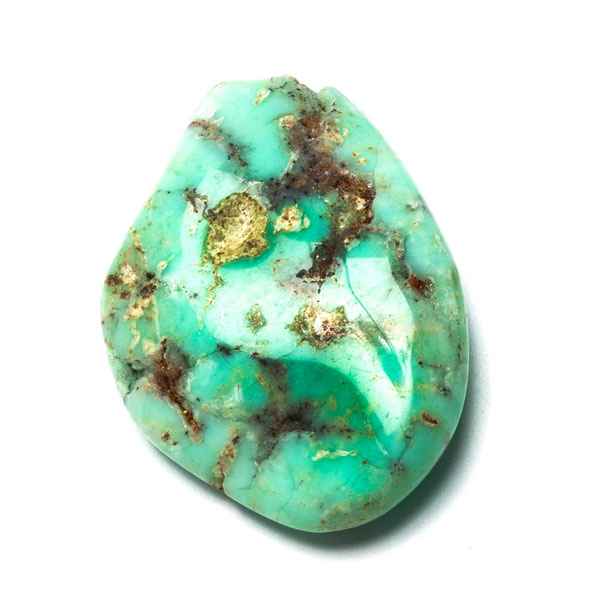
La crisoprasa es una variedad de calcedonia (cuarzo criptocristalino) que debe su vibrante color verde a pequeñas inclusiones de silicatos de níquel (a diferencia de la esmeralda, que debe su color al cromo). Se forma por el intenso desgaste o alteración de rocas ricas en níquel. Se caracteriza por su transparencia translúcida y un color verde manzana que puede llegar a ser muy intenso. Es una piedra "solar" que, si se expone demasiado tiempo a la luz directa del sol, puede perder color (aunque suele recuperarlo si se guarda en un ambiente húmedo).
| Fórmula Química | $$SiO_{2}$$ |
|---|---|
| Lustre | Ceroso a vítreo |
| Raya | Blanca |
| Fractura | Concoidea |
| Exfoliación | Nula |
| Dureza | 6,5-7 Mohs |
| Sistema | Trigonal |
¿Sabías que...?
Fue la piedra favorita de Alejandro Magno, quien siempre llevaba una crisoprasa en su cinturón durante las batallas, creyendo que le otorgaba la victoria y la astucia necesaria para dirigir a sus ejércitos.
Propiedades New-Age
La crisoprasa induce a profundos estados de meditación, fomenta la esperanza y otorga comprensión. Ayuda a que expresemos nuestros talentos, estimulando la creatividad y las relaciones personales. Energetiza el chacra corazón y el sacro, además de llevar la energía universal al cuerpo físico. Psicológicamente es una piedra relajante, ayuda a la apertura de nuevas situaciones estimulando la aceptación de uno mismo y de los demás. Mentalmente estimula el discurso fluido y la destreza mental y, emocionalmente aporta sensación de seguridad y confianza, favoreciendo la independencia y el compromiso. A nivel curativo, la crisoprasa es excelente para relajarse y tener sueños tranquilos. Úsala como elixir en casos agudos o, simplemente llévala puesta donde convenga.