Volver al listado
Volver al listado
Cuarzo Turmalinado
Yacimientos Principales
Brasil (minas de Minas Gerais), Madagascar, Estados Unidos (California), Pakistán y Sri Lanka.
Descripción y Características
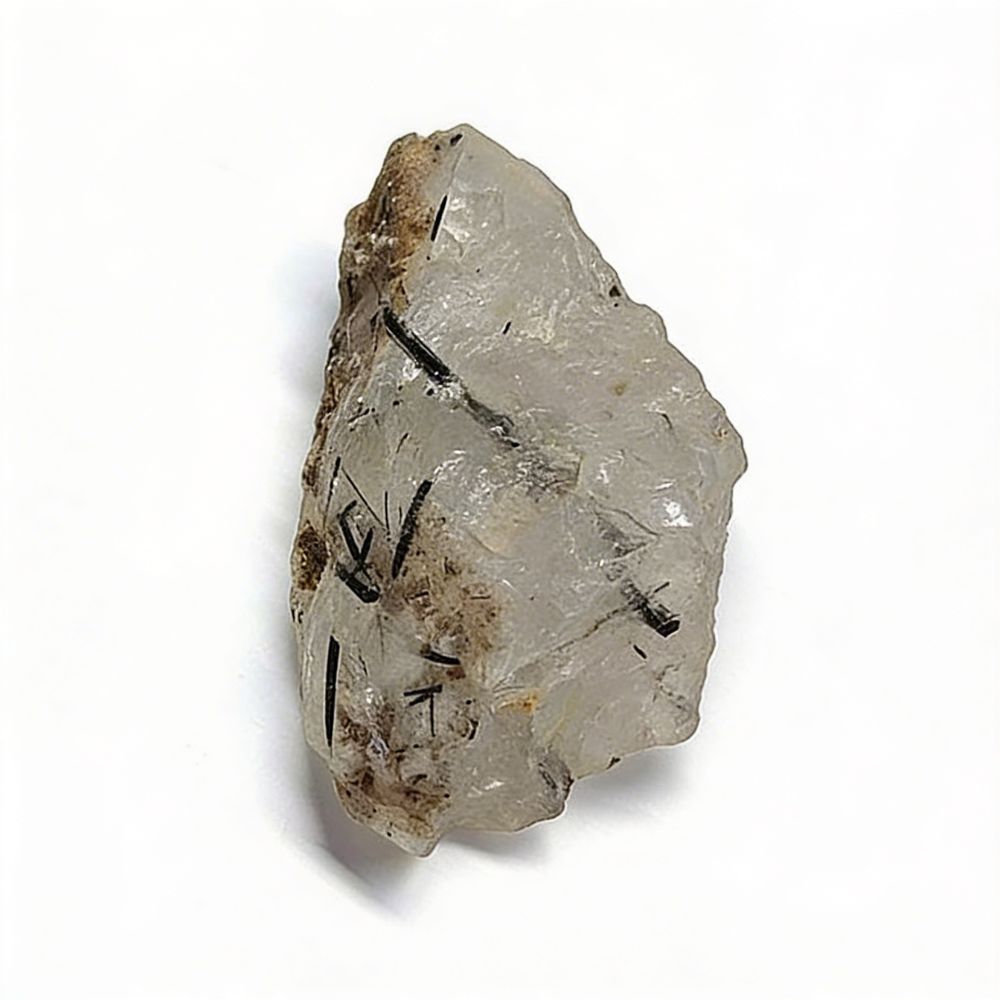
El cuarzo turmalinado es una variedad de cuarzo transparente o blanco que contiene inclusiones de cristales de turmalina negra (chorlo) en su interior. Estas inclusiones suelen presentarse como agujas largas y delgadas o prismas columnares negros que contrastan fuertemente con la claridad del cuarzo. Se forma en pegmatitas y filones hidrotermales donde ambos minerales cristalizan en las mismas condiciones de presión y temperatura. Es una combinación mineralógica única que une la dureza y claridad del cuarzo con la estructura fibrosa de la turmalina, creando patrones visuales que parecen bocetos de tinta china atrapados en hielo.
| Fórmula Química | $$SiO_{2}$$ |
|---|---|
| Lustre | Vítreo |
| Raya | Blanca |
| Fractura | Concoidea |
| Exfoliación | Nula |
| Dureza | 7 Mohs |
| Sistema | Trigonal |
¿Sabías que...?
Debido a su aspecto gráfico y contrastado, el cuarzo turmalinado ha sido históricamente comparado con el símbolo del "Yin y Yang", representando el equilibrio perfecto entre los opuestos (luz y oscuridad). En la joyería contemporánea, es una de las piedras favoritas para cortes "cabujón" y "fantasía", ya que no hay dos piezas iguales en el mundo. A menudo se le confunde con el cuarzo rutilado negro, pero se distinguen porque las agujas de turmalina son generalmente más gruesas y opacas que las de rutilo.
Propiedades New-Age
El cuarzo turmalinado es una piedra de gran alcance que combina las propiedades de protección de la turmalina negra con la capacidad de amplificación del cuarzo. Es un potente escudo contra las energías negativas y las radiaciones electromagnéticas. Espiritualmente, ayuda a integrar las sombras de la personalidad en la totalidad del ser, promoviendo la armonía interna. Mentalmente, convierte los pensamientos negativos en positivos y ayuda a solucionar conflictos internos. Es excelente para limpiar el aura y liberar tensiones a todos los niveles, proporcionando un enraizamiento espiritual muy profundo y equilibrando los meridianos del cuerpo.