Volver al listado
Volver al listado
Ilvaíta
Yacimientos Principales
Italia (Isla de Elba, fuente de los mejores cristales), Grecia (Serifos), Rusia (Dalnegorsk), China e Islandia
Descripción y Características
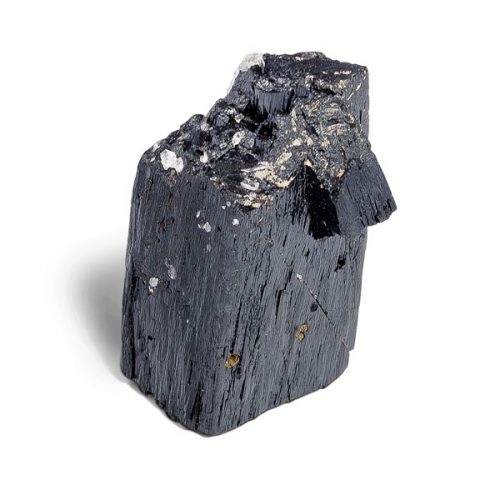
La ilvaíta es un silicato complejo de calcio y hierro que se forma principalmente en depósitos de contacto metamórfico (skarns) y en algunos filones hidrotermales. Es conocida por sus cristales prismáticos alargados, profundamente estriados de forma longitudinal, que terminan en caras piramidales bien definidas. Pertenece al sistema ortorrómbico (aunque existe una variante monoclínica rara) y destaca por su color negro intenso y su opacidad absoluta. Su nombre deriva de Ilva, el antiguo nombre latino de la isla de Elba (Italia), donde se descubrió por primera vez. Es un mineral denso y con una dureza considerable, muy apreciado en el coleccionismo por su estética sobria y sus formas arquitectónicas.
| Fórmula Química | $$CaFe_3+(Fe_2+)_2O(Si_2O_7)(OH)$$ |
|---|---|
| Lustre | Submetálico a vítreo resinoso |
| Raya | Negra a gris pardo |
| Fractura | Desigual a subconcoidea |
| Exfoliación | Clara (en dos direcciones) |
| Dureza | 5,5 - 6 Mohs |
| Sistema | Ortorrómbico |
¿Sabías que...?
Durante mucho tiempo, los cristales de ilvaíta de la Isla de Elba fueron los más codiciados del mundo, pero en las últimas décadas, los yacimientos de Dalnegorsk en Rusia han producido ejemplares de un tamaño y perfección geométrica asombrosos. Un dato técnico curioso es que la ilvaíta contiene hierro en dos estados de oxidación diferentes, lo que la hace muy interesante para estudios cristalográficos sobre la transferencia de electrones en minerales. Aunque es negra, bajo luz muy intensa y en láminas extremadamente delgadas, puede mostrar ligeros tonos translúcidos de color marrón.
Propiedades New-Age
La ilvaíta es considerada una piedra de "perseverancia" y "fuerza interior". Su energía oscura y densa la convierte en una excelente herramienta para el enraizamiento profundo, ayudando a quienes se sienten dispersos a centrar su voluntad. Espiritualmente, se dice que ayuda a estructurar los procesos de pensamiento y a materializar proyectos que parecen estancados. Es una piedra de protección que ayuda a mantener la calma y la estabilidad emocional durante periodos de gran esfuerzo físico o mental. Mentalmente, fomenta la paciencia y el sentido del deber, siendo ideal para fortalecer la disciplina personal y la resistencia ante la adversidad.