Volver al listado
Volver al listado
Ojo de Halcón
Yacimientos Principales
Sudáfrica (donde se encuentran los mejores ejemplares), Australia, Brasil e India
Descripción y Características
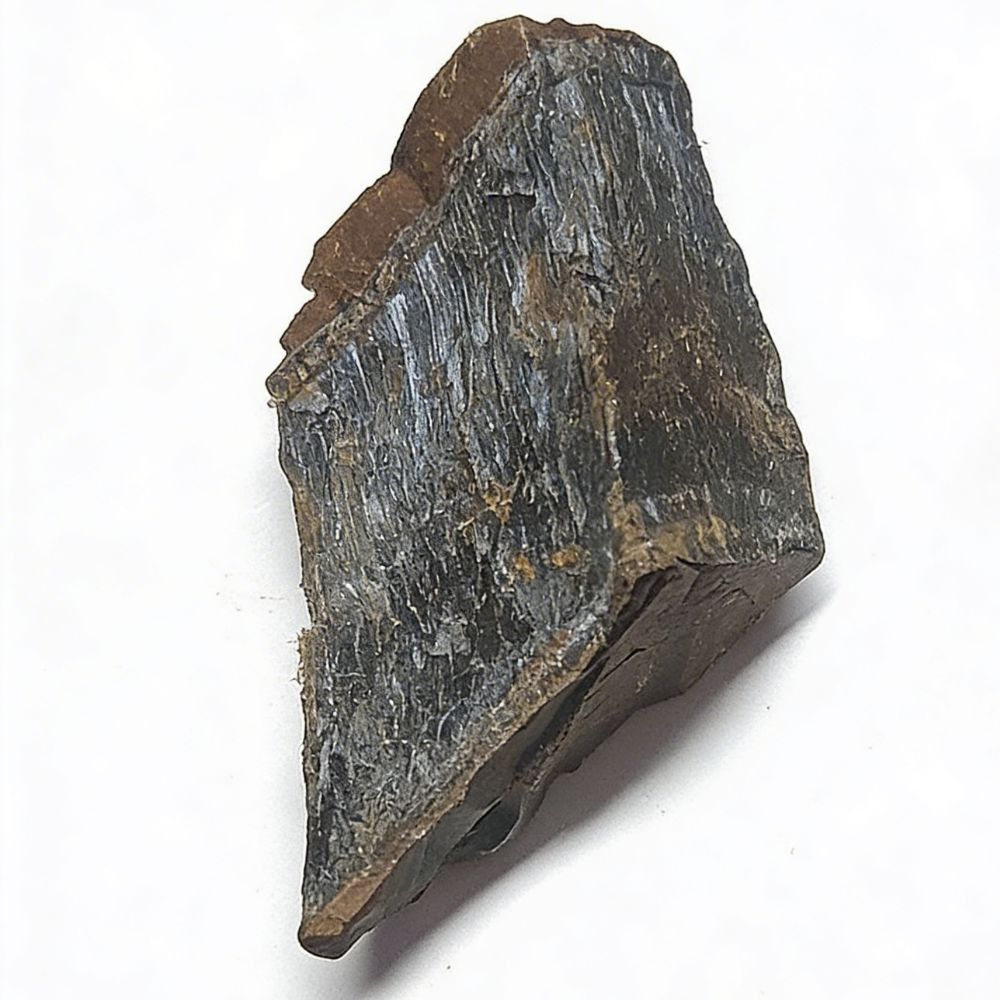
El ojo de halcón es la forma primaria y no alterada del Ojo de Tigre. Se forma cuando el cuarzo reemplaza gradualmente las fibras de un mineral llamado crocidolita (asbesto azul) manteniendo su estructura fibrosa. A diferencia del ojo de tigre, donde el hierro se ha oxidado para dar tonos dorados, en el ojo de halcón el hierro permanece en un estado que conserva su color azul grisáceo o azul petróleo profundo. Presenta una chatoyancia espectacular: una banda de luz tornasolada que recorre la piedra al moverla, imitando la mirada penetrante de un ave rapaz. Es una piedra dura y opaca que, al ser pulida en cabujón, muestra toda su profundidad sedosa.
| Fórmula Química | $$SiO_{2}$$ |
|---|---|
| Lustre | Vítreo |
| Raya | Blanca |
| Fractura | Fibrosa |
| Exfoliación | No tiene |
| Dureza | 7 Mohs |
| Sistema | Trigonal |
¿Sabías que...?
Es menos común que el ojo de tigre y a menudo se encuentra en las mismas minas, formando capas intermedias. Se le llama "ojo de halcón" porque su brillo azulado recuerda al ojo de estas aves cuando cazan. Es una gema muy apreciada en la joyería masculina por su elegancia sobria y sus destellos metálicos. Para limpiarlo energéticamente, se recomienda exponerlo a la luz de las estrellas o de la luna, ya que su energía es más fría y nocturna que la del ojo de tigre (solar) o el ojo de buey (terrenal).
Propiedades New-Age
El ojo de halcón es conocido como la piedra de la "perspectiva" y la visión lejana. Está vinculado al chakra del tercer ojo, ayudando a ver los problemas desde una altura mayor para encontrar soluciones objetivas. Se dice que ayuda a disipar patrones de pensamiento negativos y restrictivos. Espiritualmente, es una piedra de protección contra el mal de ojo y las envidias, actuando como un vigía que alerta sobre peligros ocultos. Mentalmente, aporta claridad para tomar decisiones difíciles y ayuda a conectar los hechos de forma lógica, siendo ideal para personas que necesitan enfoque y una visión clara de su futuro.