Volver al listado
Volver al listado
Peridoto
Yacimientos Principales
Estados Unidos (Arizona), Pakistán, Birmania, China y Egipto (Isla de Zabargad)
Descripción y Características
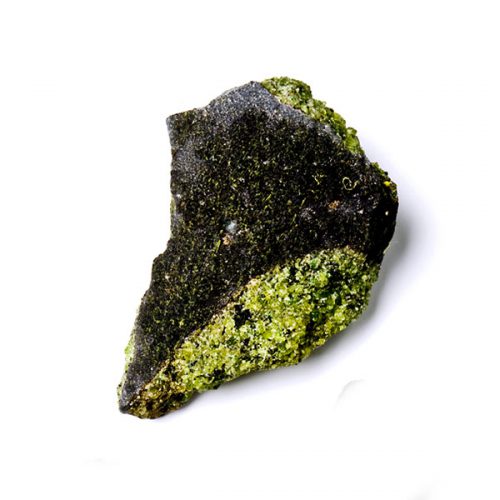
El peridoto es la variedad transparente del silicato de magnesio y hierro llamado olivina. Se forma en condiciones extremas, principalmente en el manto superior de la Tierra, y es expulsado a la superficie por la actividad volcánica. Su color verde vibrante es intrínseco a su composición química (debido al hierro), lo que significa que no depende de impurezas externas para mostrar su tono característico. Varía desde un verde amarillento claro hasta un verde oliva profundo. Es una gema de gran claridad y brillo vítreo que ha sido valorada desde la antigüedad por su frescura y su capacidad de brillar incluso bajo luz artificial escasa.
| Fórmula Química | $$(Mg, Fe)₂SiO₄$$ |
|---|---|
| Lustre | Vítreo a graso |
| Raya | Blanca |
| Fractura | Concoidea |
| Exfoliación | Imperfecta a pobre |
| Dureza | 6,5-7 Mohs |
| Sistema | Ortorrómbico |
¿Sabías que...?
Es una gema literalmente "espacial": se han encontrado cristales de peridoto en meteoritos (palasitas) que han caído a la Tierra, lo que la convierte en una de las pocas joyas de origen extraterrestre. Los antiguos egipcios la llamaban la "Gema del Sol" y creían que protegía a quien la llevaba de los terrores de la noche. Un dato importante para su cuidado es que, aunque tiene una dureza aceptable, es sensible a los cambios bruscos de temperatura y a los ácidos fuertes, por lo que no debe limpiarse nunca con vapor o ultrasonidos.
Propiedades New-Age
El peridoto es conocido como la "piedra de la abundancia" y la purificación. Se asocia con el chakra del corazón y se cree que ayuda a liberar "cargas" emocionales como el estrés, los celos o el rencor. Espiritualmente, es una piedra protectora del aura que ayuda a entender el propósito espiritual y a avanzar en el camino de la vida con confianza. Mentalmente, el peridoto agudiza el intelecto y abre la mente a nuevos niveles de conciencia, desterrando el letargo y ayudando a admitir los errores propios para corregirlos con optimismo.