Volver al listado
Volver al listado
Pirita
Yacimientos Principales
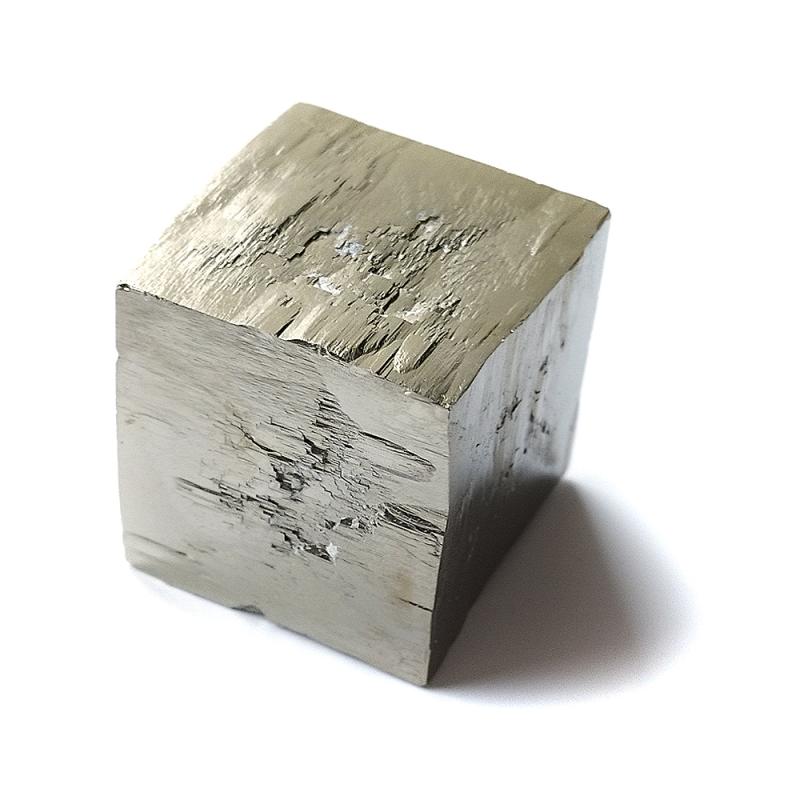
España (Río Tinto y Navajún, famosa por sus cubos perfectos), Perú, Italia y Estados Unidos.
Descripción y Características
La pirita es un disulfuro de hierro que destaca por su color amarillo latón brillante y su lustre metálico, lo que históricamente llevó a muchos buscadores de oro inexpertos a confundirla con el metal precioso. Se forma en una enorme variedad de ambientes geológicos, desde sedimentos marinos hasta filones hidrotermales. Es famosa por su asombrosa capacidad de cristalizar en formas geométricas perfectas, especialmente cubos, octaedros y piritoedros (dodecaedros de caras pentagonales). Es un mineral denso, opaco y relativamente duro, aunque quebradizo, que al ser golpeado desprende un característico olor a azufre.
| Fórmula Química | $$FeS_2$$ |
|---|---|
| Lustre | Metálico brillante |
| Raya | Negra verdosa o negra grisácea |
| Fractura | Concoidea a irregular |
| Exfoliación | Muy imperfecta a nula |
| Dureza | 6-6,5 Mohs |
| Sistema | Cúbico |
¿Sabías que...?
Su nombre proviene del griego pyr (fuego), debido a que produce chispas cuando se golpea contra el acero o el pedernal, razón por la cual se usó en los antiguos mecanismos de disparo de las armas de fuego (llave de rueda). Si tienes pirita de Navajún (España), tienes una de las maravillas de la naturaleza: cubos tan perfectos que parecen haber sido tallados por el hombre, aunque son 100% naturales.
Propiedades New-Age
La pirita es conocida como la "piedra de la prosperidad" y el éxito. Su energía solar la vincula directamente con el chakra del plexo solar, potenciando la voluntad, la confianza en uno mismo y la capacidad de manifestar riqueza. Es un escudo protector excelente que bloquea la energía negativa y los contaminantes emocionales. Espiritualmente, ayuda a superar la sensación de carencia y a reconocer el propio valor. Mentalmente, la pirita es muy útil para estudiantes y profesionales, ya que mejora la memoria, la concentración y las habilidades organizativas, aportando claridad para ver más allá de las apariencias.