Volver al listado
Volver al listado
Rodocrosita
Yacimientos Principales
Argentina (Catamarca, la fuente principal), Sudáfrica, Perú, Estados Unidos (Colorado) y Rumanía
Descripción y Características
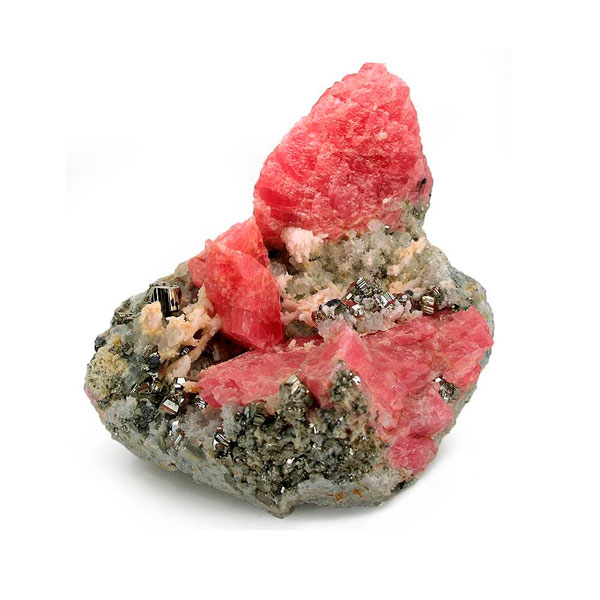
La rodocrosita es un carbonato de manganeso que debe su nombre al color rosa intenso que la caracteriza. Se forma principalmente en filones hidrotermales de baja temperatura asociados con depósitos de plata, plomo y cobre. Su forma más famosa y comercializada es la estalactítica, que al ser cortada transversalmente revela bandas concéntricas y onduladas en diferentes tonos de rosa y blanco. Aunque puede presentarse en cristales romboédricos transparentes de color rojo gema (extremadamente raros y valiosos), la variedad bandeada es la más icónica. Es un mineral relativamente blando y delicado, sensible a los ácidos y al calor extremo.
| Fórmula Química | $$MnCO_3$$ |
|---|---|
| Lustre | Viítreo o perlado |
| Raya | Blanca |
| Fractura | Irregular a concoidea |
| Exfoliación | Perfecta en tres direcciones (romboédrica) |
| Dureza | 3,5-4 Mohs |
| Sistema | Trigonal |
¿Sabías que...?
En Argentina es conocida como la "Rosa del Inca", ya que cuenta la leyenda que los incas creían que la piedra era la sangre petrificada de sus antiguos reyes y reinas. Los cristales rojos transparentes más famosos del mundo provienen de la mina Sweet Home en Colorado (EE. UU.), donde se han hallado ejemplares que alcanzan precios astronómicos en subastas. Al ser un carbonato, es muy importante no limpiarla con productos químicos ni sumergirla en agua con sal, ya que podría perder su brillo natural de forma permanente.
Propiedades New-Age
La rodocrosita es conocida como la "piedra del amor desinteresado" y la compasión. A diferencia del cuarzo rosa, que es más suave, la rodocrosita actúa con fuerza sobre el chakra del corazón y el plexo solar para sanar traumas antiguos y liberar emociones reprimidas. Se dice que ayuda a atraer a nuestra "alma gemela", no solo en el sentido romántico, sino a personas que nos ayudan a aprender lecciones vitales. Es una piedra excelente para mejorar la autoestima, fomentar una actitud positiva y estimular la creatividad y el erotismo desde un lugar de equilibrio emocional.
Usos de Rodocrosita
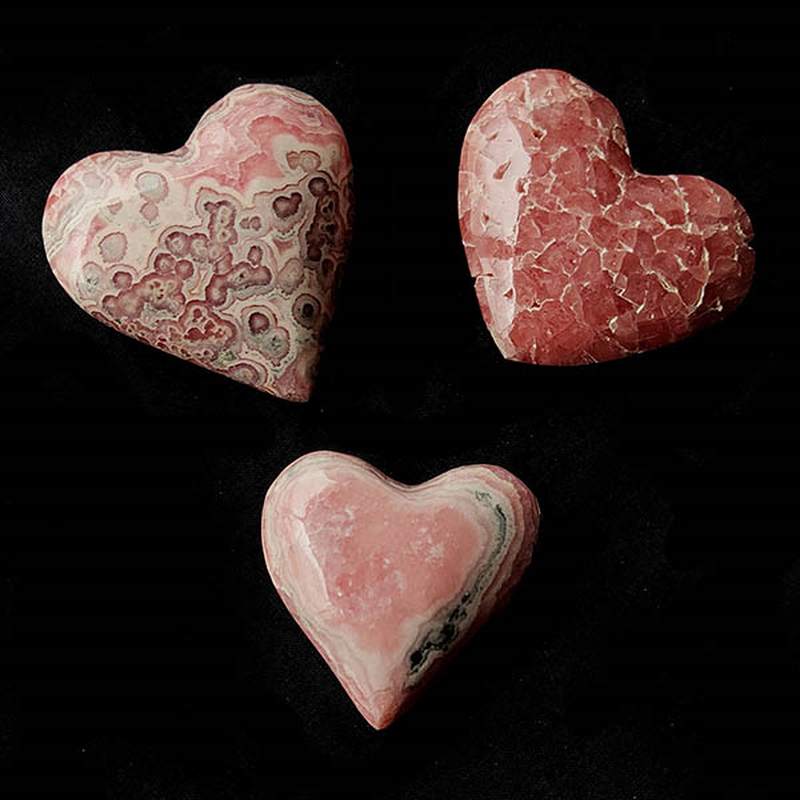
La rodocrosita se utiliza principalmente en joyería y objetos de ornamentación, destacando sus cortes en rodajas de estalactitas que revelan patrones bandeados únicos y muy decorativos.