Volver al listado
Volver al listado
Shungita
Yacimientos Principales
en la región de Carelia, Rusia (Yacimiento de Zazhoginsky)
Descripción y Características
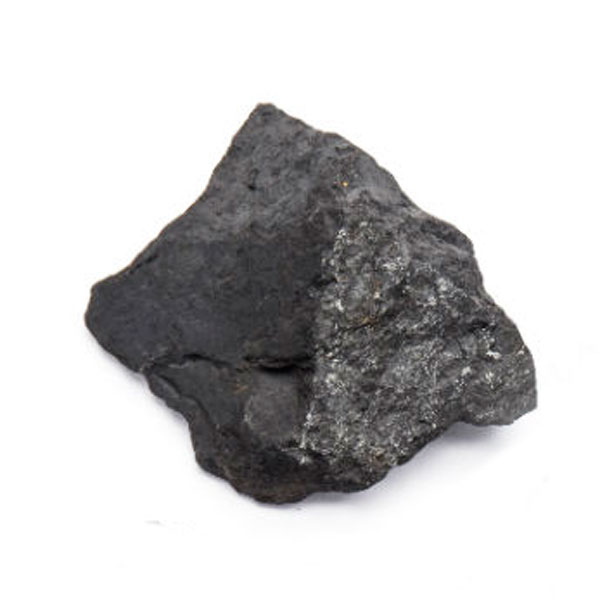
La shungita es un mineraloide precámbrico de color negro, compuesto principalmente por carbono (hasta un 98% en la variedad "Élite"). Se cree que se formó hace unos 2.000 millones de años a partir de depósitos de algas microscópicas. Su fama mundial se debe a que es el único material natural conocido que contiene fulerenos, un tipo especial de molécula de carbono pura dispuesta en forma de esfera hueca (similar a un balón de fútbol). Existen dos tipos principales: la Shungita Negra (mate y común) y la Shungita Élite o Cristalina (brillante, ligera y escasa).
| Fórmula Química | $$C (Carbono casi puro)$$ |
|---|---|
| Lustre | Metálico a mate |
| Raya | Negra |
| Fractura | Concoidea |
| Exfoliación | Nula |
| Dureza | 3.5-5 Mohs |
| Sistema | Amorfo (sin estructura cristalina) |
¿Sabías que...?
Pedro el Grande de Rusia fundó el primer balneario ruso en Carelia basándose en las propiedades purificadoras del agua que pasaba por depósitos de shungita. Los científicos que descubrieron los fulerenos (presentes en la shungita) recibieron el Premio Nobel de Química en 1996. Es un excelente conductor de la electricidad; una forma fácil de verificar si tu shungita es auténtica es usar un multímetro o tocar la pantalla de un móvil con ella: si el teléfono reacciona, es verdadera.
Propiedades New-Age
La shungita es conocida como el "agujero negro" de las energías negativas. Su propiedad más valorada es su capacidad para absorber y neutralizar las radiaciones electromagnéticas (CEM) emitidas por dispositivos electrónicos como móviles o Wi-Fi. Es una piedra de enraizamiento profundo que limpia el aura y equilibra los chakras inferiores. Espiritualmente, se utiliza para la purificación emocional y para fortalecer el sistema inmunológico. A diferencia de otros cristales, no necesita ser "limpiada" con frecuencia, ya que transmuta la energía negativa de forma constante debido a su estructura molecular.
Usos de Shungita
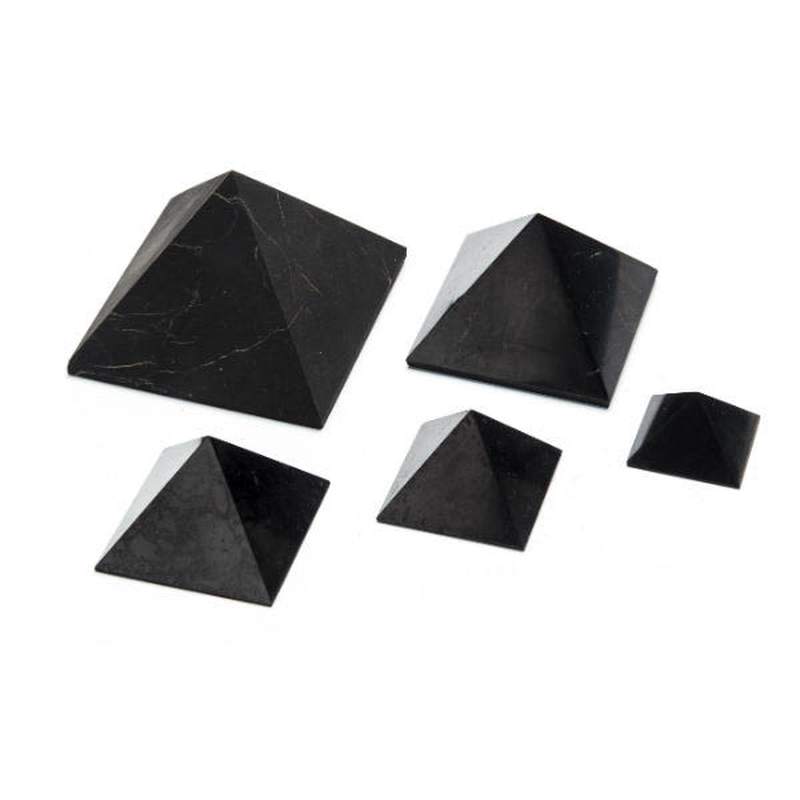
La shungita se utiliza para fabricar protectores contra la radiación, pirámides decorativas, colgantes y para la purificación de agua (especialmente en Rusia).