Volver al listado
Volver al listado
Siderita
Yacimientos Principales
España (Vizcaya y Cantabria), Inglaterra (Cornualles), Portugal, Austria, Brasil y Canadá.
Descripción y Características
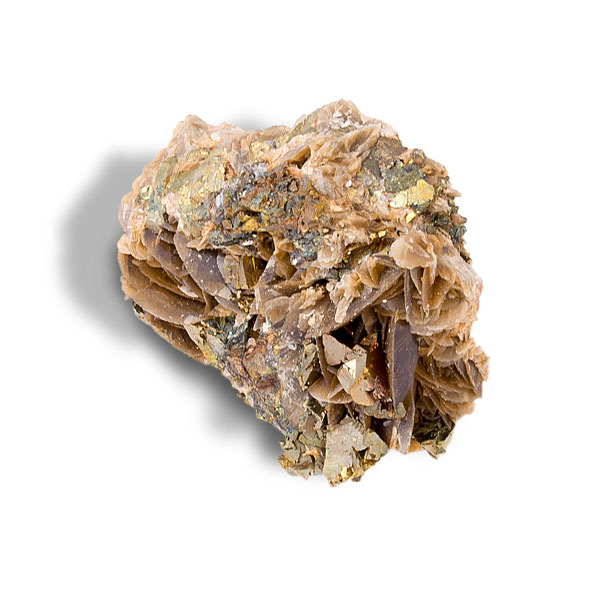
La siderita es un carbonato de hierro que pertenece al grupo de la calcita. Se forma comúnmente en ambientes sedimentarios, en filones hidrotermales y en formaciones de hierro bandeado. Su nombre proviene de la palabra griega sideros (hierro), ya que es una de las principales menas de este metal. Los cristales de siderita suelen presentarse como romboedros con caras curvas, una característica muy distintiva, y su color varía desde el beige pálido hasta el marrón chocolate oscuro debido a la oxidación del hierro al entrar en contacto con el aire.
| Fórmula Química | $$FeCO$$ |
|---|---|
| Lustre | Vítreo a perlado |
| Raya | Blanca |
| Fractura | Concoidea a irregular |
| Exfoliación | Perfecta en tres direcciones (romboédrica) |
| Dureza | 3,5-4,5 Mohs |
| Sistema | Trigonal |
¿Sabías que...?
Debido a su alto contenido en hierro, la siderita es un mineral notablemente pesado para ser un carbonato. Es un mineral que sufre de "alteración": con el tiempo y la humedad, puede transformarse en Limonita o Goethita, manteniendo la forma original del cristal de siderita (lo que se conoce como pseudomorfismo). Aunque no es una gema común en joyería debido a su baja dureza, los coleccionistas valoran mucho los cristales transparentes de calidad gema, que suelen tallarse solo para exhibición.
Propiedades New-Age
La siderita es conocida como la "piedra del alineamiento" y la estabilidad. Se dice que ayuda a alinear todos los chakras y los cuerpos sutiles, aportando una sensación de equilibrio y solidez. Es una piedra de enraizamiento que fomenta la positividad y la autodisciplina, siendo muy útil para personas que se sienten dispersas o abrumadas por sus responsabilidades. Espiritualmente, ayuda a encontrar el propósito de vida y a mantener la calma durante situaciones de estrés profundo. Se considera una piedra que aporta "fuerza silenciosa" y resistencia emocional.