Volver al listado
Volver al listado
Sodalita
Yacimientos Principales
Brasil (Bahía), Canadá (Ontario), Namibia, India y Estados Unidos
Descripción y Características
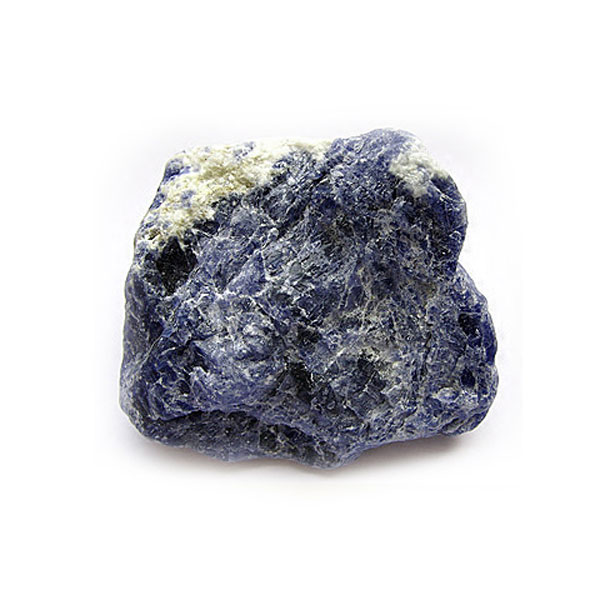
La sodalita es un silicato de aluminio y sodio que pertenece al grupo de los feldespatoides. Se forma principalmente en rocas ígneas ricas en sodio (sienitas nefelínicas). Su nombre hace referencia directa a su alto contenido de sodio. Es una piedra opaca que destaca por su color azul real intenso, frecuentemente atravesado por vetas blancas de calcita. A diferencia del lapislázuli, la sodalita rara vez contiene motas doradas de pirita y tiene un tono de azul más translúcido en los bordes. Es una gema muy apreciada en decoración y joyería por su belleza y relativa dureza.
| Fórmula Química | $$Na_8(A_{l6}Si_6O_{24})C_l$$ |
|---|---|
| Lustre | Vítreo a graso |
| Raya | Blanca |
| Fractura | Concoidea a irregular |
| Exfoliación | Pobre / Imperfecta |
| Dureza | 5-6 Mohs |
| Sistema | Cúbico |
¿Sabías que...?
En 1891, durante una visita real a Canadá, la Princesa Patricia de Connaught quedó fascinada por la sodalita de Ontario y la eligió para decorar su residencia en Londres; desde entonces, a esa variedad se la conoce como "Princess Blue". Un dato fascinante es que existe una variedad de sodalita llamada Hackmanita que presenta tenebrescencia: cambia de color al ser expuesta a la luz solar y vuelve a su color original en la oscuridad. Al ser un mineral que contiene cloro, es recomendable no exponerlo a ácidos fuertes que puedan dañar su superficie.
Propiedades New-Age
La sodalita es conocida como la "piedra de la verdad" y la lógica. Está vinculada al chakra del tercer ojo y al de la garganta, facilitando la comunicación clara y la expresión de los pensamientos racionales. Ayuda a profundizar en la meditación y a fortalecer la intuición. Es una piedra excelente para el trabajo en equipo, ya que aporta armonía, solidaridad y un propósito común. Mentalmente, elimina la confusión, equilibra las emociones y calma los ataques de pánico, permitiendo que la persona mantenga la objetividad y la paz interior en momentos de estrés.
Usos de Sodalita
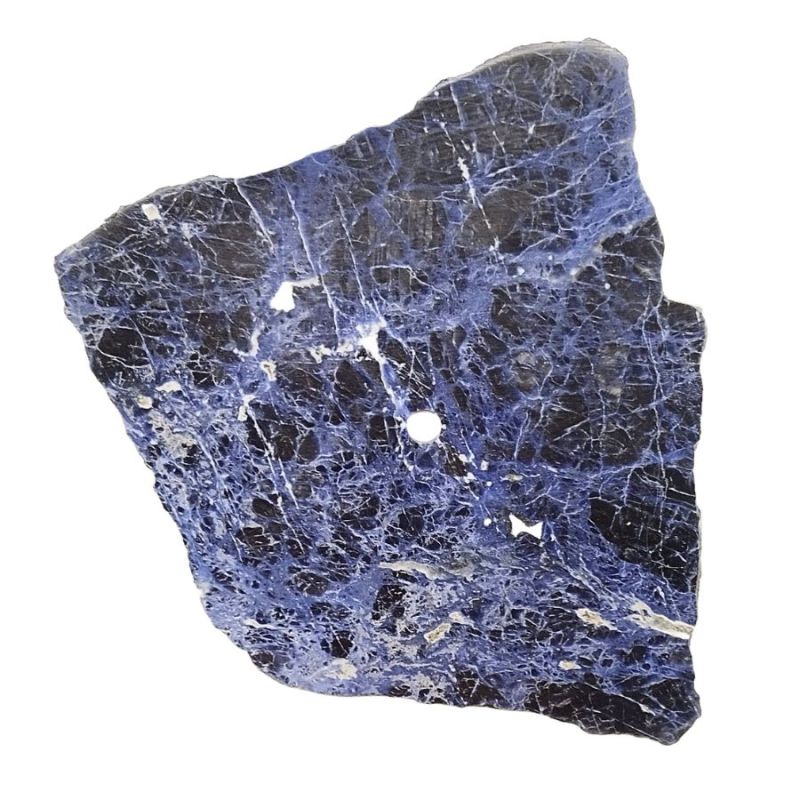
La sodalita se utiliza principalmente en joyería (cabujones y cuentas), escultura, revestimientos arquitectónicos de lujo y objetos decorativos como esferas y pirámides.