Volver al listado
Volver al listado
Sugilita
Yacimientos Principales
Sudáfrica (Desierto de Kalahari, mina Wessels), Japón, Canadá e India
Descripción y Características
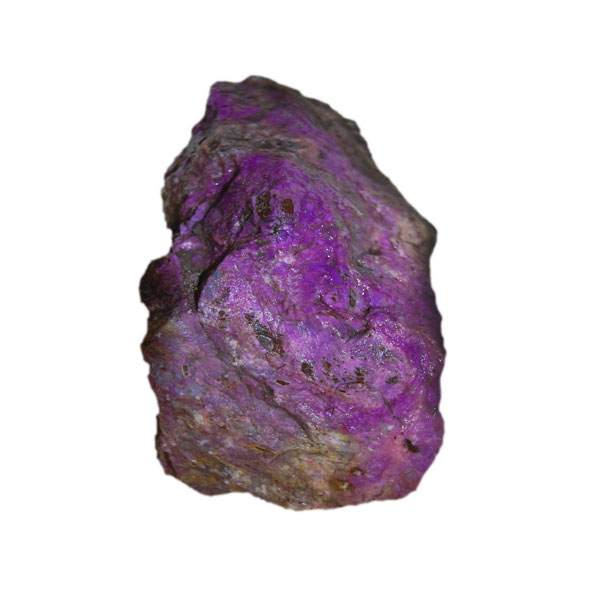
La sugilita es un silicato complejo de potasio, sodio, litio, hierro, manganeso y aluminio. Aunque se descubrió inicialmente en Japón, los ejemplares de calidad gema de color púrpura intenso provienen casi exclusivamente de una única mina en Sudáfrica. Su color varía desde un lila pálido hasta un violeta profundo y real, debido a la presencia de manganeso en su composición. Es una piedra opaca a translúcida que suele presentarse en forma masiva, aunque en raras ocasiones forma cristales diminutos. Debido a su escasez y a que su yacimiento principal está prácticamente agotado, es considerada una gema de coleccionista de alto valor.
| Fórmula Química | $$KNa_2Li_3(Fe, Mn, Al)_2Si_{l2}O_{30}$$ |
|---|---|
| Lustre | Vítreo a ceroso |
| Raya | Blanca |
| Fractura | Concoidea a irregular |
| Exfoliación | Pobre / Nula |
| Dureza | 6-6,5 Mohs |
| Sistema | Hexagonal |
¿Sabías que...?
Fue descubierta por primera vez en 1944 por el petrólogo japonés Ken-ichi Sugi, de quien recibe su nombre. Sin embargo, en aquel momento eran solo cristales amarillentos sin valor comercial; no fue hasta 1979 cuando se halló el famoso depósito de color púrpura en Sudáfrica que revolucionó el mundo de las gemas. En el mercado, a veces se la llama erróneamente "Luvulita" o "Azurita Real". Es una piedra resistente, pero como cualquier silicato complejo, debe protegerse de productos químicos agresivos y golpes fuertes.
Propiedades New-Age
La sugilita es conocida como la "piedra del sanador" y la "piedra de la era de Acuario". Está vinculada al chakra de la corona y al tercer ojo. Se dice que es una de las piedras más poderosas para la protección espiritual, creando un "escudo de luz" alrededor del portador. Ayuda a las personas sensibles a adaptarse a la vibración de la Tierra sin sentirse abrumadas. Emocionalmente, ayuda a superar la desesperanza, fomenta el perdón y alivia el dolor profundo. Es muy utilizada en meditación para canalizar energías de alta frecuencia y para encontrar el propósito espiritual de uno mismo.