Volver al listado
Volver al listado
Tanzanita
Yacimientos Principales
Únicamente en las colinas de Merelani, cerca del Monte Kilimanjaro, Tanzania
Descripción y Características
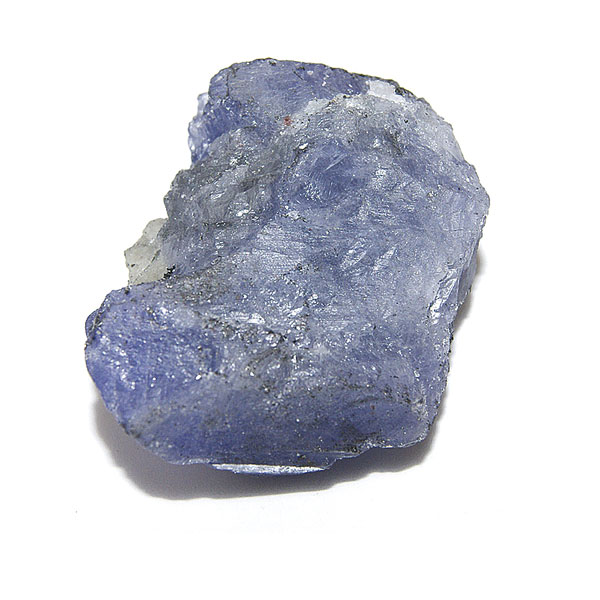
La tanzanita es la variedad azul/púrpura del mineral Zoisita. Es un silicato de calcio y aluminio que debe su extraordinario color a la presencia de pequeñas cantidades de vanadio. Su característica más asombrosa es el pleocroísmo: una sola piedra puede mostrar tres colores diferentes (azul, violeta y rojo borgoña) según el ángulo desde el que se mire. Curiosamente, la mayoría de las tanzanitas salen de la tierra con tonos marrones y adquieren su famoso color azul tras ser sometidas a un tratamiento térmico suave que imita el calor natural de la tierra.
| Fórmula Química | $$Ca_2A_{l3}(SiO_4)(Si_2O_7)O(OH)$$ |
|---|---|
| Lustre | Vitreo, nacarado |
| Raya | Blanca |
| Fractura | Irregular a concoidea |
| Exfoliación | Perfecta en una dirección |
| Dureza | 6,5 - 7 Mohs |
| Sistema | Ortorrómbico |
¿Sabías que...?
Fue descubierta apenas en 1967 y fue la famosa joyería Tiffany & Co. quien le dio su nombre en honor a su país de origen, afirmando que era la gema más bella descubierta en 2.000 años. Se la considera una "gema de una sola generación", ya que se estima que las minas de Tanzania se agotarán en las próximas décadas. Debido a su exfoliación perfecta y su dureza moderada, es una piedra "frágil" para ser una gema preciosa; no debe limpiarse nunca con ultrasonidos y se recomienda usarla principalmente en colgantes o pendientes para evitar golpes.
Propiedades New-Age
La tanzanita es conocida como la "piedra de la transmutación" y la conexión elevada. Al unir las energías del chakra de la garganta, del tercer ojo y de la corona, facilita una comunicación profunda con las dimensiones espirituales. Se dice que ayuda a integrar la mente con el corazón, permitiendo que la persona viva desde una verdad compasiva. Es ideal para períodos de cambio profundo, ya que ayuda a disipar viejos patrones y a manifestar los deseos del alma. Emocionalmente, aporta calma y ayuda a superar las crisis de ansiedad o depresión.