Volver al listado
Volver al listado
Variscita
Yacimientos Principales
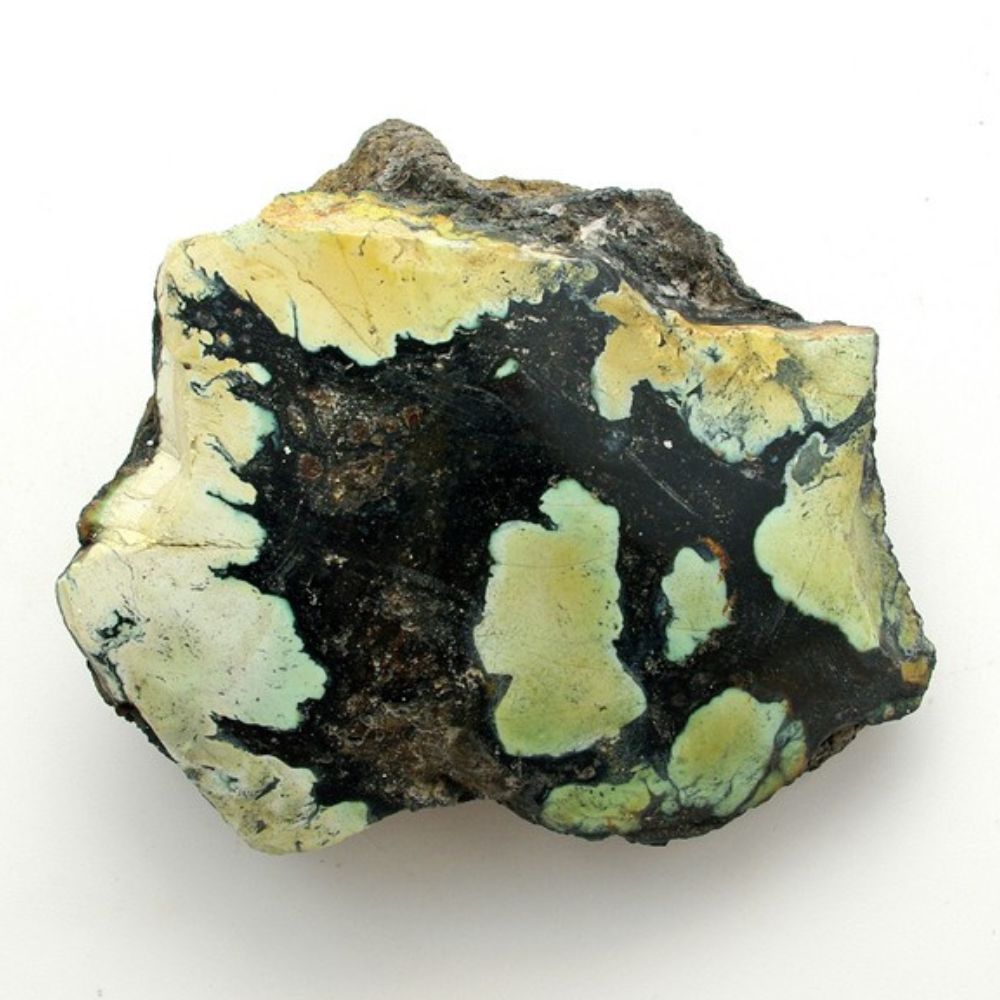
Los ejemplares como el de la foto proceden de Montcada i Reixach, Barcelona (España)
Descripción y Características
La variscita es un fosfato de aluminio hidratado que se forma por la deposición de aguas ricas en fosfatos sobre rocas alumínicas. Es un mineral de origen secundario que suele aparecer en forma de masas criptocristalinas, nódulos o costras, siendo muy raros los cristales bien formados. Su color varía desde un verde pálido hasta un verde esmeralda profundo, a veces con tintes azulados. A diferencia de la turquesa, la variscita debe su color principalmente al cromo (en lugar del cobre) y suele presentar una matriz de color blanco o grisáceo de fosfatos de aluminio como la wardita.
| Fórmula Química | $$AlPO_4·_2H_2O$$ |
|---|---|
| Lustre | Ceroso a vítreo |
| Raya | Blanca |
| Fractura | Concoidea a irregular |
| Exfoliación | Pobre |
| Dureza | 3.5-4.5 Mohs |
| Sistema | Ortorrómbico |
¿Sabías que...?
Fue descrita por primera vez en 1837 en la región de Variscia (Sajonia, Alemania), de donde proviene su nombre. En Estados Unidos, la variedad de Utah es sumamente famosa y a veces se le llama "Utahlita". En España, existen yacimientos prehistóricos muy importantes, como las Minas de Can Tintorer en Gavá (Barcelona), donde los antiguos pobladores del Neolítico ya extraían variscita para fabricar cuentas de collar y adornos hace más de 5.000 años.
Propiedades New-Age
La variscita es conocida como la "piedra de la calma" y la esperanza. Está vinculada al chakra del corazón, promoviendo una sensación de paz profunda y claridad emocional. Se dice que ayuda a salir de estados de desesperación y a encontrar soluciones racionales a problemas complejos. Es una piedra excelente para quienes sufren de estrés o ansiedad, ya que su energía suave ayuda a calmar el sistema nervioso. Espiritualmente, facilita el recuerdo de vidas pasadas y ayuda a expresar los sentimientos con honestidad y sencillez.