Volver al listado
Volver al listado
Zafiro
Yacimientos Principales
Cachemira (India), Sri Lanka, Madagascar, Tailandia y Australia
Descripción y Características
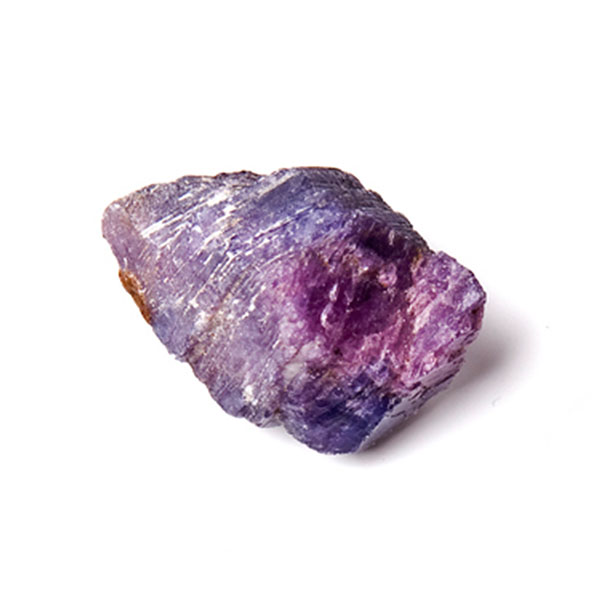
El zafiro es la variedad de corindón de cualquier color excepto el rojo (que se reserva para el rubí). Es un óxido de aluminio que debe su icónico color azul a trazas de hierro y titanio. Se forma en rocas ígneas y metamórficas, o se encuentra en depósitos aluviales. Es una de las gemas más duras y duraderas que existen, lo que la hace ideal para el uso diario en joyería. Aunque el azul es el más famoso, existen zafiros de "fantasía" en casi todos los colores del arcoíris, siendo el Padparadscha (un tono rosa-anaranjado) uno de los más raros y caros.
| Fórmula Química | $$A_{l2}O_3$$ |
|---|---|
| Lustre | Vítreo a adamantino |
| Raya | Blanca |
| Fractura | Concoidea a irregular |
| Exfoliación | Nula (presenta partición) |
| Dureza | 9 Mohs |
| Sistema | Trigonal |
¿Sabías que...?
El nombre proviene del latín sapphirus y del griego sappheiros, que significa "azul". El zafiro más famoso del mundo es probablemente el del anillo de compromiso que perteneció a la Princesa Diana (y ahora a la Princesa de Gales). Algunos zafiros presentan un efecto óptico llamado asterismo, donde inclusiones de aguja de rutilo crean una estrella de seis rayos que parece flotar sobre la superficie de la piedra cuando se corta en cabujón.
Propiedades New-Age
El zafiro es conocido como la "piedra de la sabiduría" y la realeza. Está vinculado al chakra de la garganta y al del tercer ojo. Se dice que ayuda a enfocar la mente, aporta autodisciplina y atrae la prosperidad. Es una piedra de paz espiritual que ayuda a liberar la tensión mental y los pensamientos no deseados. Tradicionalmente, se ha usado como un talismán para preservar la pureza, proteger contra la envidia y fortalecer la conexión con el plano divino, aportando claridad en la comunicación y honestidad en las relaciones.